













Royalsea Casino Sign Up In Italy

In 2026, Royalsea in Italy is evaluated by registration, login, payments, mobile gaming, and control tools.

Fortune Gems 2 Slot

Table of Contents

  • The Dog House Megaways Slot
  • Lucky Joker 10 Extra Gifts Slot
  • Sword of Ares Slot
  • Floating Dragon Hold & Spin Slot
  • Leprechaun Riches Slot
  • Fruit Cocktail Slot
  • The Dog House Megaways Slot
  • Sword of Ares Slot
  • Fruit Million Slot
  • The Dog House Megaways Slot
  • Big Fisherman Slot
  • Big Fisherman Slot
  • Seven Books Unlimited Slot
  • Royalsea Fortune Slot
  • Sword of Ares Slot
  • Floating Dragon Hold & Spin Slot
  • 9 Mad Hats Slot
  • Floating Dragon Hold & Spin Slot
  • Big Bass Splash Slot

After Royalsea Casino Login: First Useful Checks

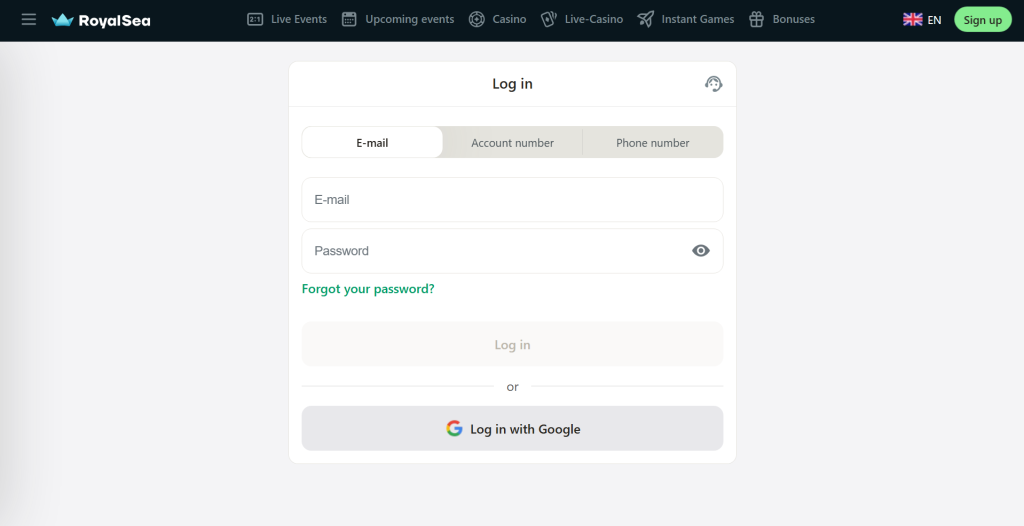
Il primo ingresso non serve solo a entrare. Serve a capire se il conto è leggibile. Una piattaforma disponibile in Italy per utenti adulti, nel rispetto delle regole applicabili, dovrebbe permettere a chi la usa di trovare in pochi minuti saldo, profilo, cronologia, sezione pagamenti e strumenti di pausa. Se queste aree sono chiare, la sessione parte bene. Se invece ogni funzione richiede tentativi, il problema si sente subito.
Login 1

Many users make the most common mistake in the first few minutes: they log in, open a random game, and only afterward try to figure out where the really important functions are. It's better to do the opposite. First, check the profile, then check notifications, history, and personal limits, and finally decide how to start. Imagine having a short break before leaving. In that situation, you don't need a noisy environment; you need an environment that lets you understand where you are and what you can do without wasting time.

When Access is Interrupted for No Apparent Reason

Not always an interrupted login indicates a serious problem. Sometimes it's just a credential typed in haste, a confirmation left unfinished, or a verification that requires an extra step. If this happens, the worst thing to do is repeat the same action five times in a row. It's better to stop, read the messages shown on the screen, and calmly reconstruct the order of attempts.

Imagine trying to log back in from your phone while also responding to messages. A minimal distraction is enough to confuse a password, miss a notification, or overlook an alert. The most organized users don't react immediately. First, they understand where the flow was interrupted, then they try again.
How Royalsea Casino Sign Up Works in Practice

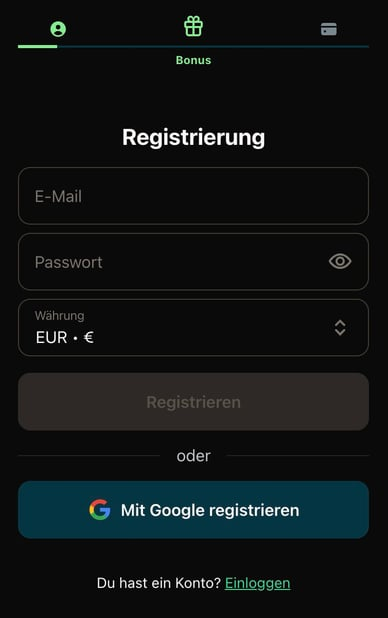
Registration should be treated as a simple but serious procedure. Name, contact details, date of birth, credentials, and personal data must be consistent from the beginning. Not because the account needs to look perfect, but because any minor inaccuracy will resurface at the least convenient moment: when you want to recover access, confirm a transaction, or complete a profile verification.

Login 2

Imagine opening your account on the couch, phone in hand, with little desire to re-read the fields. It is precisely in that scenario that an email is written incorrectly, a number remains outdated, or a password is saved confusingly. At first, it seems like nothing. But then, a small subsequent check is enough to understand how much those hastily made mistakes weigh.

Therefore, after completing the registration, it's advisable not to rush straight to the catalog. The most attentive players take a quick tour of the personal area, check where documents, history, notifications, and settings are located, and only then decide whether to start a session. It's a concrete habit, not a formality.

Royalsea Casino Sign Up: What to Prepare in Advance

The best preparation is more tedious than it seems, but it saves time later. A readable document, an active contact method, a correctly registered payment method, and a clear idea of your personal budget: these are the four elements that help the most. If you have them ready, registration flows smoothly. If you have to look for them at the moment, each step takes longer.

Imagine wanting to complete everything before dinner, with only a few minutes to spare. If you have to stop to look for a file or check a detail, you lose your rhythm and start again with more confusion. Preparing what you need beforehand avoids this.

The Mistakes That Slow Down The First Day

The truly frequent mistakes are almost always small. A contact detail no longer in use, a wrong figure, a field left on automatic without checking, a barely readable document. None of these problems are dramatic on their own, but together they make the process less linear.

Usually, you see the difference already on the first day. Imagine two users: the first quickly fills everything out and closes; the second takes an extra two minutes and double-checks. After a few hours, the second user finds everything more easily, while the first spends time fixing details that could have been resolved immediately.

Phone Usage: Short Sessions, Quick Checks

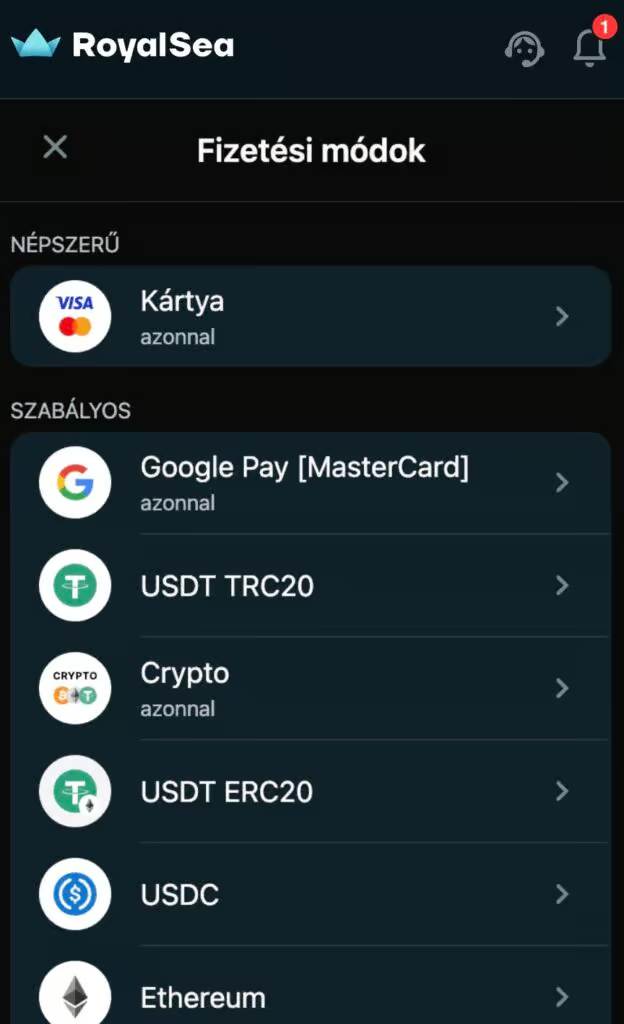
In 2026, many users will access primarily from mobile. This changes how a platform is judged. On a phone, it's not just about everything being visible; it's about everything being quickly readable. Balance, profile, history, payments, and limits should be in easily accessible areas, without forcing you to tap the screen ten times to figure out where you are.

Login 3

Imagine a ten-minute break during the day. You want to open your account, check if everything is in order, and decide whether to stay or leave immediately. If the mobile interface is well-designed, you understand it in an instant. If, however, each section seems designed to keep you longer than necessary, the session is already compromised from the start.

There's also an important difference between phone and computer. The computer helps to better read long details, but the phone accompanies much more frequent real-life moments: waiting, commuting, short breaks, evenings on the sofa. Therefore, the quality of the mobile experience weighs heavily in the final judgment. It's not enough to just be there. You need to function effectively within the limited time and reduced attention span with which the phone is used.

A small routine helps a lot: first balance, then notifications, then history, then decision. Users who follow this order make fewer mistakes because they don't start clicking out of habit.

Usage Time

Prima Cosa Da Controllare

Errore Da Evitare

Short break

saldo e avvisi recenti

aprire troppe sezioni

Sessione serale

budget e durata disponibile

entrare senza un piano

Controllo veloce

cronologia e stato del profilo

confondere verifica e gioco

Giornata stressante

limiti e strumenti di pausa

cercare di recuperare subito

Pagamenti E Prelievi Senza Confusione

Money movements are where theory ends. Until that moment, everything can seem simple. However, when you need to deposit, check your balance, or request a withdrawal, the quality of the experience becomes concrete. An organized account makes these areas readable. An account built or used in haste, on the other hand, tends to create doubts precisely where more clarity is needed.

The most useful rule is also the most underestimated: stop thirty seconds before confirming. Amount, method, profile status, and reason for the operation. Four quick checks. Imagine a late evening when you feel like adding funds to continue a bit longer. If you don't ask yourself why you're making that operation and how much you really want to use, the phone's speed risks replacing your decision-making.

What to Check Before Confirming a Transaction

Prima di confermare un versamento o un prelievo conviene guardare saldo disponibile, importo scelto, metodo attivo e stato della cronologia recente. Sembra tutto ovvio, ma quasi tutti saltano almeno uno di questi passaggi quando sono stanchi o distratti. Chi usa il conto con più criterio, invece, si abitua a rileggere sempre. Questo piccolo gesto cambia molto più di quanto sembri.

Imagine being on the phone with someone while performing an operation. This is one of those situations where you misread a notification or choose an amount without thinking enough. That's why financial operations should be done at neutral times, not amidst other distractions.

Gameplay, Budget, and Choosing the Right Time

A platform isn't just evaluated by how it lets you enter, but by how it accompanies your gameplay rhythm. Some open a random title as soon as they enter, others switch categories three times in ten minutes, and some realize too late that they haven't decided how much to spend or how long to stay. All of this can be avoided with a minimal structure.

Before playing, it's always a good idea to ask yourself a couple of questions. How much time do I really have? How much money do I want to use today? If you don't have a clear answer, the session starts off unbalanced. Imagine entering after a long day, tired, just to 'take a quick look'. This is the classic context where a short session extends without reason.

More mature users quickly learn to distinguish between a short session and a reasoned one. The former requires simplicity and a clear exit. The latter can afford more attention. The problem arises when you try to treat them the same way.

Closing also matters. Many think about how to enter, very few about how to exit. Yet, a good session ends at the time decided beforehand, not when fatigue or frustration takes over.

How to Choose a Short Session

A short session works well when it starts with a specific task. Check your account, open a single title, use a pre-decided amount, close within a realistic timeframe. Imagine you have fifteen minutes before leaving. If you enter with this plan, everything remains simple. If you enter without a plan, the time extends on its own and the session loses its shape.

Security, Limits, and Pause Tools

Security isn't just about passwords and logins. It's about how the user stays in control of their pace. A well-organized account should allow setting spending limits, temporary breaks, self-exclusion, and other control tools without hiding them deep in menus. These features aren't just for when something goes wrong. They're for before, when you want to prevent the session from going off-plan.

Imagine a stressful week where you find yourself opening your account more out of reflex than choice. In that moment, a short break or a temporary suspension can make more difference than any promise you made to yourself at the end of the evening. The advantage isn't in "forbidding," but in creating distance between impulse and action.

Routine also matters. Using strong credentials, not leaving your account open without reason, calmly reading alerts, and frequently checking your history are simple habits, but they protect more than many generic formulas. Users who maintain these habits usually find the platform clearer not because it's magically better, but because they use it with a recognizable order.

Another often overlooked point is time. Many check their money, but not the actual duration of their sessions. Yet a messy mobile session is almost always recognizable by the minutes that stretch on without a clear decision. That's why time and spending limits have value together, not separately.

When to Use a Short Break

A short break is useful when you feel you're still engaged, but without direction. You keep tapping the screen, opening and closing the same areas, telling yourself you'll just stay two more minutes, and then repeating the same phrase multiple times. Imagine noticing this scene in real-time. It's the right moment to stop, not to push a little further.

Why Limits Work Better Sooner

Limits truly work when set with a cool head. If you only choose them when the session is already confused, it's much harder to respect them. Imagine instead entering knowing your threshold and your exit time. The platform stops being a flow of impulses and becomes a sequence of decisions again.

Support, Assistance, and Final Evaluation

Support is one of those areas that seem secondary until you really need it. Then, when a transaction isn't clear or a login fails, it becomes central to your judgment. That's why it's worth understanding how to contact them and how to do it well right away. The best request isn't the longest, but the most precise.

Imagine writing only "it doesn't work." You'll probably have to explain everything from scratch. If, instead, you specify the device, time, section involved, and message seen, the conversation starts more usefully right away. The most practical users do just that: they gather the facts, then ask for help.

The final evaluation of Royalsea, for a user in Italy in 2026, should not depend on a single impression. It should arise from a chain of concrete elements: login, registration, profile clarity, payment order, mobile quality, break tools, and support. If this chain holds up in real moments – quick break, evening session, transaction review, need to stop – then the overall judgment improves for practical reasons, not momentary enthusiasm.

FAQ

The most useful thing is not to jump straight into the game. It's better to first check your profile, balance, history, notifications, and control tools. This small initial tour helps you understand if the account is truly readable. If you do this on your first login, all subsequent sessions become more linear and less improvised.

It's best to have a legible document, an active contact method, strong credentials, and a clear idea of your personal budget ready. Complex steps aren't needed, but a minimum of order is. Those who prepare these elements in advance almost always avoid unnecessary delays during their first day of use.

The phone is very useful for quick checks, notifications, balance, and small operational steps, especially when you have little time. It works well if you log in with a specific purpose. If, however, you open the account just out of habit or boredom, you risk making more taps than necessary and losing the thread of the session.

Usually, the signal comes when you are no longer choosing with clarity. You keep entering and exiting the same areas, wanting to recover immediately, or extending the time without a clear decision. At that moment, a short break can help much more than another attempt made out of inertia.

Because it helps reconstruct what you actually did. It's not just for seeing amounts and times, but also for understanding if your behavior is following the plan you decided on. For those who usa their account from their mobile at various times of the day, it's a fundamental tool for not mixing everything up.

The most useful request is one based on facts: what you were doing, from which device, in which section, and with which on-screen message. You don't need to write a lot. You need to write clearly. This reduces unnecessary steps and makes the response much more concrete.

The right time is when you have real-time, sufficient attention, and a pre-decided budget. If you log in tired, distracted, or just to fill a void, the session risks starting badly. A better choice always comes from a clear context, not a sudden impulse.