













Royalsea Casino App In Italy

Practical overview for users in Italy: access, mobile gaming, payments, support, and responsible use in 2026.

Fortune Gems 2 Slot

Table of Contents

  • The Dog House Megaways Slot
  • Lucky Joker 10 Extra Gifts Slot
  • Sword of Ares Slot
  • Floating Dragon Hold & Spin Slot
  • Leprechaun Riches Slot
  • Fruit Cocktail Slot
  • The Dog House Megaways Slot
  • Sword of Ares Slot
  • Fruit Million Slot
  • The Dog House Megaways Slot
  • Big Fisherman Slot
  • Big Fisherman Slot
  • Seven Books Unlimited Slot
  • Royalsea Fortune Slot
  • Sword of Ares Slot
  • Floating Dragon Hold & Spin Slot
  • 9 Mad Hats Slot
  • Floating Dragon Hold & Spin Slot
  • Big Bass Splash Slot

Why Royalsea App Really Matters In 2026

When talking about a platform designed for phone use, the first useful question isn't whether the interface looks modern. The right question is different: how well does it keep up with the user's real pace? In 2026, many people in Italy open their accounts from mobile, check their balance in seconds, read a notification on the fly, and decide whether to stop there or start a short session. In such a scenario, speed alone isn't enough. Order is needed.
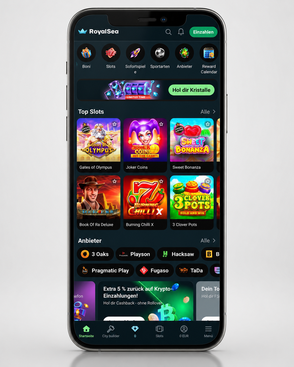
App 1

Imagine a common scene. You're out, you have ten minutes free, and you want to see if your account is readable from your phone. If the home screen immediately shows the useful sections, if the balance remains clear, and if the buttons don't force you to go back constantly, the platform starts well. If, on the other hand, everything is compressed, hard to read, or full of unnecessary steps, the problem is immediately felt. A mobile gaming environment isn't judged in theory. It's judged while you usa.

For those accessing from Italy, the criterion remains concrete. The platform must be usable by adults, in compliance with applicable rules, and with tools that help manage time, account, and sessions.

How to Use Royalsea Casino App Without Rushing

The most common mistake is treating the app or mobile version as something to be opened and consumed automatically. In reality, it's advisable to slow down right from the first login. First, look at the account, then check if the personal area is clear, only then decide whether to deposit, check games, or close the session.

Think about a very simple situation: you log in while doing something else, reply to a message, switch screens, go back, and realize you haven't read a notification properly. This happens often. That's why many more organized users only use their phone when they already know what they want to do: enter, check, act, exit. This small discipline greatly changes the experience.
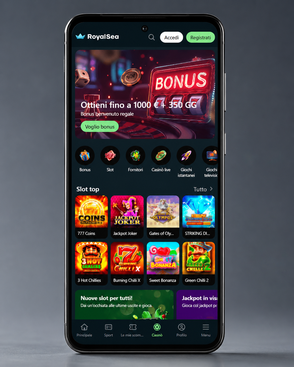
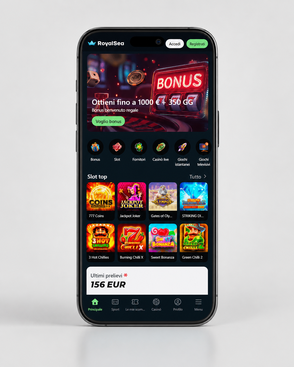
application 2

Registration, Access, and Initial Account Setup

Mobile registration seems easy almost always. The point, however, is not to fill in two fields quickly. The point is to build an account that remains readable, recoverable, and stable over time. An email address used rarely, a number entered incorrectly, a confirmation skipped because the screen was closed too quickly: all these details seem small at first and become burdensome only later.

Usually, the most attentive users do this. They open the account at a quiet moment, not while on the move. They read the fields carefully, check the contact details, and save the login in an organized way. Immediately after, they enter the personal area and check if the profile is truly complete. It's an unglamorous step, but it avoids many practical problems later on.

Another useful point concerns the relationship between access and security. Passwords, notifications, profile recovery, and personal control tools should not only be sought when a snag arises. It makes more sense to identify them immediately, when the account has just been created. In an online gaming environment, knowing where these functions are located is almost as valuable as knowing where the games are.

What to Check Once the Account is Active

As soon as the account is operational, it's advisable to check five elements: personal data, contact details, security area, history, and pause tools. You don't need to analyze every detail for half an hour, but it's enough to understand if the platform allows you to find everything without difficulty. Imagine doing this check in the first few minutes, even before thinking about a session. If you can orient yourself immediately, you already have a good sign of the quality of the experience.

When It's Convenient to Use the Phone and When Not

The phone is very useful for quick access, balance checks, and short sessions. It becomes less convenient when you need to carefully read settings, understand a cashier item, or fix profile data. Think of two different moments: in the first, you just want to check your account during a break; in the second, you need to clarify a doubt before a more delicate operation. In the first case, mobile may be enough. In the second, a larger screen usually helps to make fewer mistakes.

Cashier, Balance, and Movement Management

The cashier is the point where a platform stops being just pleasant to use and starts showing if it can truly accompany the user. It's not just the presence of various methods that counts. The clarity of the path counts: where you see the movements, how you read the status of operations, how simple it is to understand if the account is ready for a deposit or for transferring the balance. If this information is scattered, the experience immediately becomes rigid.

App 3

Imagine you've just finished a short phone session and want to check what happened. Open the history, look for the most recent transaction, and try to understand if everything adds up. That's when the quality of the cashier is measured. If the financial area allows you to clearly see income, expenses, and the status of requests, you feel in control. If, on the other hand, each step seems to hide something behind another menu, trust decreases.

Many users in Italy judge a platform precisely by this. Not by how easy it is to log in, but by how orderly it is to move money and reconstruct the steps. The balance must remain readable at all times, especially when playing on mobile.

Elemento Da Controllare

Perché È Utile

Dati Del Profilo

Avoid inconsistencies between accounts and operations

Cronologia Movimenti

Permette di ricostruire cosa è successo

Stato Delle Richieste

Helps to understand if a step is open or closed

Personal Limits

Keeps the budget within a chosen threshold

Notifiche Del Sistema

Segnala se manca un’azione da completare

Area Assistenza

Useful when a doubt requires a precise answer

Game Selection And Session Pace

A good mobile environment is not judged by graphics alone. It is judged by how well it helps you choose based on the time you have. Some enter for a very quick session, others want to explore more calmly. In both cases, the lobby should guide, not push you to click indiscriminately. The value of the catalog lies not only in quantity. It lies in the ability to get you to your goal with less dispersion.

Imagine opening the platform at 10:30 PM. You have little time, you want a simple experience, and you don't intend to get lost in twenty categories. If the navigation is clear, a few taps are enough to choose. If, on the other hand, the path is confusing, you risk spending half the session just orienting yourself. Is it a detail? No. For those who usa especially on mobile, it's a central part of the experience.

How to Choose a Game for a Quick Trial

For a first trial on your phone, it makes sense to aim for something simple, with a readable pace and few superfluous steps. Not because it's necessarily the absolute best choice, but because it leaves room to observe the rest: balance, fluidity, visual comfort, command response. Imagine wanting to understand the platform rather than seeking a long stay. In that case, an immediate title helps you read the environment without adding noise.

Personal Limits, Breaks, and Time Control

On a gaming platform used mostly by mobile, time is often the first element that slips away. Not because of a lack of will, but because the phone makes everything quick, continuous, and easy to reopen. That's why personal control tools are not a detail. They are part of the experience. Deposit limits, reminders, temporary timeouts, self-exclusion: they are not only useful in difficult moments, but especially before, when the mind is clearer.

Imagine opening the app with the idea of staying for fifteen minutes. You finish a session, glance at your balance, change games, then go to the cashier and suddenly almost an hour has passed. It's a common dynamic. That's why many disciplined users set a limit even before starting. Not out of rigidity, but to prevent the platform's pace from deciding for them.

A well-used account is one you know how to interrupt. It's not enough to be able to log in quickly. You also need to exit on time. This is an important difference, because many people judge a service by the convenience of access, but the real quality is also seen in the ease with which it allows you to stop, take a break, and possibly return later.

How to Set a Break Before It's Really Needed

A break works best when decided in advance. If you wait until you feel already carried away by the session, you are trying to correct the pace while the pace has already started. Think about an ordinary evening when you just want to relax a bit. If you have already decided on a duration and perhaps a reminder, the platform stays within your boundaries. If you haven't decided anything, the boundary shifts on its own, and you often notice it too late.

Why Exiting on Time Matters as Much as Entering Well

Many users underestimate the moment they close the app. Yet, that's where you see if the account is truly under control. Imagine you've already done what you needed: checked your balance, read the history, tried a game, clarified a doubt. Staying longer out of inertia adds no quality. Exiting when you intended, however, transforms the session into a conscious choice and not a dragged-out stay.

Assistance, Notifications, and Small Real Problems

Assistance becomes important when something gets stuck at a specific point. An incomplete login, an unclear notification, a screen that seems frozen, a transaction you don't immediately understand in the history. In these moments, sending generic messages is not helpful. You need to describe the problem well: what you were doing, from which device, in which section, and with what message on the screen.

Imagine opening the app from your phone, going to the cashier, and finding a wording you don't know how to interpret. Many immediately write 'it's not working,' but this phrase is of little use. Useful assistance works better if it receives concrete details. If you explain that the doubt arises in the history, after a certain operation, on a certain device, the answer can become truly practical.

For users in Italy, this point is particularly important because many sessions happen in quick and distracted moments. If the app fails to communicate clearly, the probability of errors increases. Therefore, support and the quality of system messages should be considered part of the final judgment, not a secondary detail.

When to Write to Support Usefully

It's advisable to write to support when you have already gathered the main information: device, approximate time, the step where everything stopped, and the displayed text. Imagine not being able to understand a notification in the cashier. Just saying something isn't working almost always lengthens the exchange. Saying instead where you are, what you did, and what appears on the screen helps the person responding much more.

Final Evaluation For Users In Italy

To truly evaluate Royalsea in 2026, it's not enough to ask if it's pleasant to use. You need to understand if the account holds up to how people actually use it: quick logins, short breaks, on-the-fly balance checks, mobile sessions, reading the cashier, retrieving information without distraction. If these steps flow smoothly, the platform works well. If, however, every action seems to force you to slow down confusingly, the judgment changes.

Imagine a very concrete test. Open an account, check your profile, look at history and cashier, try a short session, then log out and reread everything calmly. Even without long-term use, you've already gathered real insights. This approach is worth more than many abstract opinions because it focuses on what you actually do.

For those accessing from Italy, the right measure remains simple: platform available, use in compliance with applicable rules, access restricted to adults, attention to budget and time. If the app helps keep these elements together, then it can become a convenient solution for daily life. If, on the other hand, it complicates them, it's better to notice it soon.

FAQ

The most useful way is to treat the first login as a technical test and not as a full session. Log in, check your profile, open the cashier, look at history and notifications, then log out. Imagine spending ten minutes just to orient yourself. If you can find everything without difficulty, you already have a good sign. If, on the other hand, the interface forces you to search too much, it's wise to remain cautious.

It's better to do it at a quiet moment, not while you're on the move or doing other things. Mobile registration is only seemingly simple, but a single distraction can lead to entering data incorrectly or skipping an important confirmation. If you dedicate a few minutes with full attention, the account starts much more organized and avoids subsequent problems.

For quick checks and short sessions, the phone is perfectly fine. For reading settings, clarifying a doubt in the cashier, or adjusting the profile, a larger screen is often more convenient. Many users adopt a mixed logic: mobile for quick use, computer for steps that require more calm. It's a practical and often very effective choice.

Before depositing funds, it's advisable to verify that the profile is complete, that the contact details are correct, that the cashier is readable, and that you have already decided on a personal limit for the session. It seems like a small checklist, but it prevents haste from driving everything. Imagine wanting to take the first step in a few minutes: these checks will save you many doubts later on.

Because limits work best when you decide them before starting and not in the middle of the session. If you wait until time has already extended or the budget is less clear, you are trying to restore order on the run. Think of a normal evening when you just want to relax a bit. A predefined threshold makes everything cleaner and less impulsive.

The first thing to do is read it calmly within the right context: section, time, and operation just performed. Then it's advisable to check the history and account status. The least useful thing is to ignore it or, conversely, to panic. If the message remains unclear, you can write to support, explaining exactly where you saw it and what you were doing.

A break makes sense not only when you feel you are in difficulty, but also when you notice that the session is going beyond the initial plan. If you log in for a short time and see that you are staying online without a specific purpose, stopping is an intelligent choice. A timely break protects the session's rhythm and keeps control in your hands.